Mountain Bike Ride

Adventure Wairoa and the Whangawehi team are all working hard to get the second Whangawehi Mountain Bike Ride underway for this Saturday (28th of January), meeting at 9.30 am beside the Mahia Fishing Club . If you are looking for something to do, come along and experience a mountain bike ride over private land ($10/adult). This year, a special children’s (5 to 8 years of age)  event has been organised starting at 10.45 am so bring them along (free).

For more details and latest updates, visit the Mountain Bike Ride tab or click on the following links :

  mountain-bike-poster-jan2017

whangawehikidsride

See you there.

A great walk

On Saturday the 14th of December, a group of enthusiastic trampers walked through the forest down to the Whangawehi boat ramp. The weather was great with a nice sea breeze towards the lower reaches. The surprise was to discover that the shelter built along the river was nearly finished (enclosed). All visitors were impressed by this hidden facility  in such a remote place and are looking forward to utilising it in the future.

Thank you all for supporting the guided walks. The last walk will take place on Wednesday the 18th of January. See you there.

Wildlife survey and enhancement options

In November 2016, John Cheyne and Hans Rook (Environmental Consultants) carried out a survey on the Whangawehi Catchment footprint with the idea of enhancing and better connecting the different ecosystems restored. Over the past two three years, the group has retired 42 ha of riparian margins, 5 ha of bush block and established 135 000 native trees. Pat and Sue O’Brien also retired 10 years ago a network of wetlands (40 ha) which brings the total area to 82 ha. This significant land area should attract and sustain large numbers of rare wetland birds including the Matuku or Bittern. The Matuku are so rare they have the highest New Zealand conservation threat ranking (Nationally critical) which is higher than Blue duck/Whio (Nationally vulnerable), Nort Island Kokako (Recovering) and North Island Brown Kiwi (Nationally Vulnerable). Nationally critical is the same conservation threat status allocated to Kakapo, Takahe, Shore plover and Black Robin. Matuku is the rarest heron in the world and it is estimated that the population in New Zealand today is only 750-800 birds.

This report gives suggestions on how to enhance our habitats to attract some of these rare birds. Pest control is obviously a MUST do if we want to bring back  and sustain a Matuku population in the catchment.

Follow the link : wetland-survey
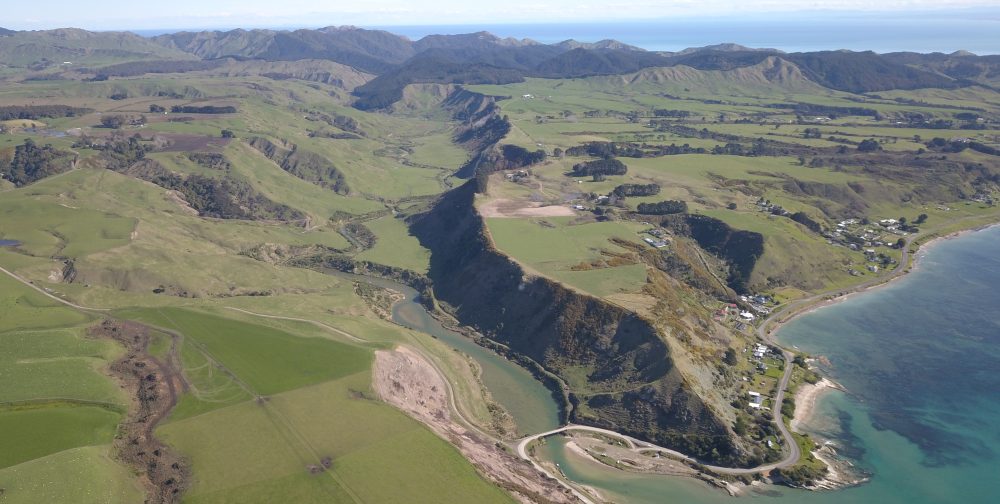
Visit to the Cape Sanctuary

On the 24th of November, The Whangawehi Catchment Management Group had the privilege to visit the Cape Sanctuary to learn from a famous initiative. A big thank you to Campbell Leckie and his team for guiding us through and giving us an insight on the work done. The visit was inspirational and gave us all an idea of what could be achieved at Whangawehi.

Two experts at Whangawehi

On the 12th and 13th of November, two well renown consultants came to Whangawehi to assess the work done and provide expertise and advice on how to better manage the protected ecosystems and increase their biodiversity. A report will follow but both were most impressed by the work done by the group. Guidance was given on water management in the wetlands in order to create more favourable habitats for wetland species. Water levels and diverse margins or ecotones are key to the success.

A big thank you to John Cheyne and Hans Rook for their help and support.

Water monitoring run

On Thursday the 3d, Arthur Bowen carried out a water monitoring run and observed a lot of changes along the river. The most encouraging observation was a school of 200 white baits swimming in the stream up in the forest. White baits were observed in the Mangatupae stream as well…the project is working! The river banks are also starting to grow abundant crops of water cress…indicating that the Mahinga kai is definitively returning.  Water clarity was extremely good with no alguae growth observed yet.