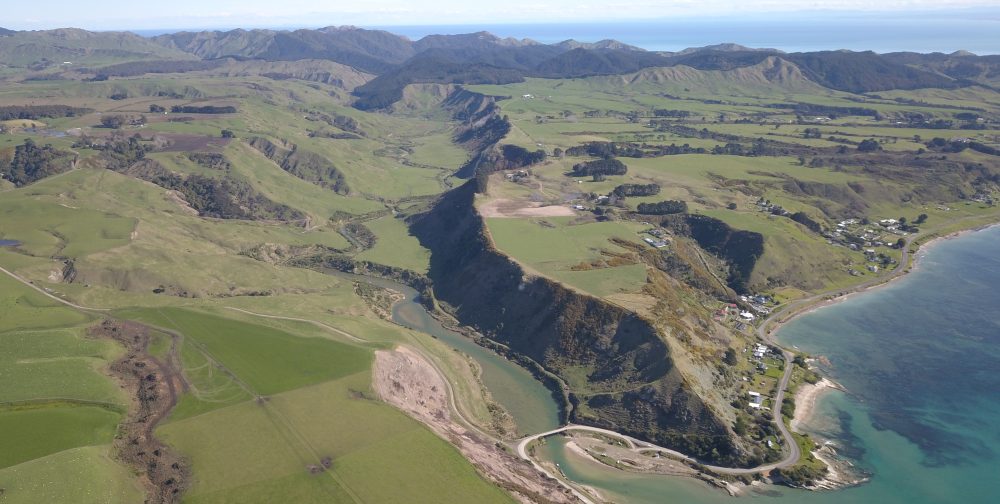
Community support for a walkway/cycleway at Whangawehi

Kia ora koutou,

As you all know, the WCM group has been working collaboratively with Marae, Landowners and agencies to protect and enhance the water quality of the Whangawehi stream for 4 years. This has resulted in a number of positive social and environmental outcomes. The group established  135 000 native trees over the past 3 winters and retired  42 ha of riparian margins and 5 ha of native forest. Other milestones include the construction of a shelter with some public facilities.

The WCMG would like to share the benefits of the work done with all New Zealanders via the development of a formalised walkway. The group has been working with the New Zealand Access Commission to progress further the vision but we need a strong community support to carry it out successfully.

Could you please send me a letter or an email of support that I could use during my discussions with landowners, agencies and potential sponsors in order to leverage further support.

Thank you very much for your help.

Nga mihi nui kia koutou

Nic Caviale Delzescaux : caviale@hbrc.govt.nz

Community gathering at the Whangawehi Whare

On the 26th of January, the Whangawehi Committee gathered along the river to attend its first meeting in the newly built whare. This shelter built along the proposed walkway will allow the community to reconnect with the river and its native forest. This building was made possible thanks to the support of Carters Wairoa, land owners Pat O’Brien and DOC.

Thank you all for your support.

A great walk

On Saturday the 14th of December, a group of enthusiastic trampers walked through the forest down to the Whangawehi boat ramp. The weather was great with a nice sea breeze towards the lower reaches. The surprise was to discover that the shelter built along the river was nearly finished (enclosed). All visitors were impressed by this hidden facility  in such a remote place and are looking forward to utilising it in the future.

Thank you all for supporting the guided walks. The last walk will take place on Wednesday the 18th of January. See you there.

Wildlife survey and enhancement options

In November 2016, John Cheyne and Hans Rook (Environmental Consultants) carried out a survey on the Whangawehi Catchment footprint with the idea of enhancing and better connecting the different ecosystems restored. Over the past two three years, the group has retired 42 ha of riparian margins, 5 ha of bush block and established 135 000 native trees. Pat and Sue O’Brien also retired 10 years ago a network of wetlands (40 ha) which brings the total area to 82 ha. This significant land area should attract and sustain large numbers of rare wetland birds including the Matuku or Bittern. The Matuku are so rare they have the highest New Zealand conservation threat ranking (Nationally critical) which is higher than Blue duck/Whio (Nationally vulnerable), Nort Island Kokako (Recovering) and North Island Brown Kiwi (Nationally Vulnerable). Nationally critical is the same conservation threat status allocated to Kakapo, Takahe, Shore plover and Black Robin. Matuku is the rarest heron in the world and it is estimated that the population in New Zealand today is only 750-800 birds.

This report gives suggestions on how to enhance our habitats to attract some of these rare birds. Pest control is obviously a MUST do if we want to bring back  and sustain a Matuku population in the catchment.

Follow the link : wetland-survey

The Ministry for the Environment visits Whangawehi

Roz Andersen, from the Ministry for the Environment, came to visit the project and check if we had made good use of MFE funding.

MFE substantially supports the project via the Te Mana o Te Wai and Community Environment Fund. The funds received so far have helped deliver an holistic programme including the delivery of our largest conservation campaign so far ie the construction of fences, the extension of reticulated water supplies for stock and the establishment of a large number of native trees. Roz was impressed by the work done and also got to better understand our challenges in a dynamic environment. She was happily surprised to discover our new shelter and flax collection around it.

The WCMG would like to thank the Ministry and Roz in particular for making the time to come, visit us and understand our challenges at ground level.

Okepuha Station is taking off

The WCM group is preparing a new riparian project on Okepuha Station, owned by Hannah and Richard Coop. The  young couple signed the groups’ Memorandum of Understanding in October 2015 and was looking forward to getting started. The project became possible through funding applications and will allow initially the retirement of 10 ha of eroding gullies and the establishment of 25 000 native trees (July 2017).

We welcome this good news and thank our generous funders.

Visit to the Cape Sanctuary

On the 24th of November, The Whangawehi Catchment Management Group had the privilege to visit the Cape Sanctuary to learn from a famous initiative. A big thank you to Campbell Leckie and his team for guiding us through and giving us an insight on the work done. The visit was inspirational and gave us all an idea of what could be achieved at Whangawehi.

Two experts at Whangawehi

On the 12th and 13th of November, two well renown consultants came to Whangawehi to assess the work done and provide expertise and advice on how to better manage the protected ecosystems and increase their biodiversity. A report will follow but both were most impressed by the work done by the group. Guidance was given on water management in the wetlands in order to create more favourable habitats for wetland species. Water levels and diverse margins or ecotones are key to the success.

A big thank you to John Cheyne and Hans Rook for their help and support.

A flax collection at Whangawehi

Sue O’Brien recently established a flax collection along the river. 12 rare specimen donated by Landcare and Research were planted around the Whare. The idea will be to provide a high quality supply of different types of flaxes and develop, with the community, weaving activities around the whare.

We will keep you posted. Thank you Sue