1st Whangawehi guided walk 2016

Despite the average weather, the second guided walk was a success with a reasonable turnout.  Families and regular visitors from Mahia appreciated the fact that they could walk through private land and discover a bit more in depth about the Peninsula and it’s rich Maori history.  The next walk is planned for Saturday 9th January 2016, meeting at the Mahia fishing club at 9am.


A fantastic first guided walk

The first summer guided walk of the season got underway with a sizable group attending.  Arthur, Malcolm and Nic shared the story of the Whangawehi river to a group of enthusiastic locals and holiday makers.  The day was enjoyed by all and the group welcomes any other persons wanting to join the second walk planned for Saturday 2nd of January 2016.  Thank you to all the landowners for opening their gates on these special occasions and Sandy from Go Bus for helping out with transport logistics during the holiday period.  On behalf of the Whangawehi Catchment Management Group we wish you all a Happy New Year.

Nuhaka school visits Whangawehi

The Whangawehi Catchment Management group was privileged to have the visit of Nuhaka school students today in what could be shaping up to be a new partnership between the two groups.

Oha Manuel, community engagement officer and Nic Caviale, project co-ordinator walked the students to Mamangu for a site visit.  The children undertook water testing on the Whangawehi River, laid out traps for pest control measures and staked the newly planted native trees.

On returning, the group stopped next to a midden (an old Maori shellfish pit)  and discussed how local Tipuna lived off the land and the sea.

The final highlight for the day was visiting the blue penguin box site where the group is actively trying to attract back this bird.

Thank  you to  Shane Mildenhall for allowing access to the site and to the students for their help and enthusiasm.
Whangawehi guided walks

​Through the course of this summer the Whangawehi Catchment Management group wants to open its gate’s to both the local and tourist community by offering a series of free guided walks through a piece of its unique environment. The group wants to update the community and share the progress made so far, as well as investigate the potential future for a walking track similar to the successful Banks Peninsula walkway in the south island over its own catchment.

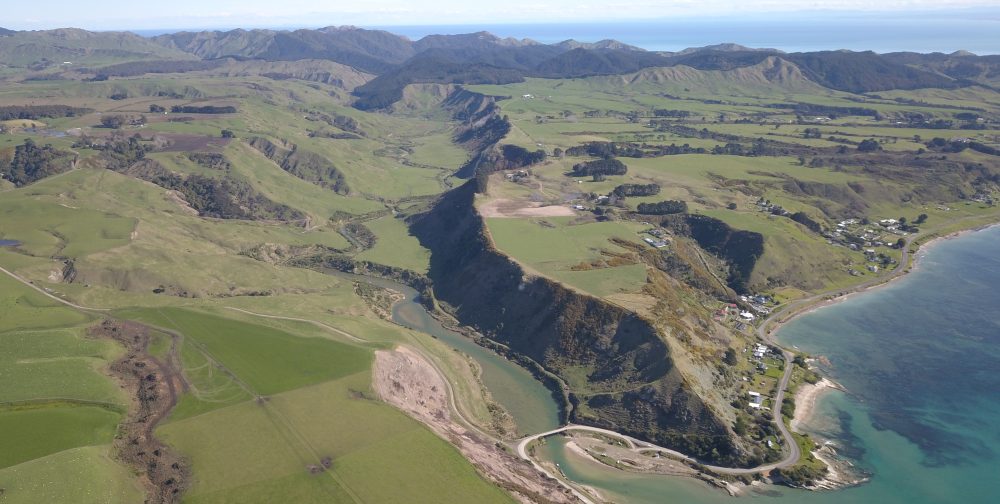
The walk will start from the headwaters of the Whangawehi which takes in breath-taking views of Mahia Peninsula before heading down through stunning diverse forest. The guided walk will continue meandering down through a series of farms and end up at the river mouth of the Whangawehi stream. It’s approximately 15 kilometers long from start to end over private land which landowners have agreed to open for this special occasion. Along the way the guide will talk in-depth about the restoration project over the past two years including its latest blue penguin project and give an interpretation of the rich cultural sites and historic heritage of the catchment. Members of the group will have a display stall at the upcoming summer Mahia markets and will be holding a number of presentations at the Mokotahi Hall at Mahia beach promoting the work their doing and trying to develop stronger links and support from the community. All of these events will have discussions around a long term goal of starting a walking/mountain biking track through the catchment and being part of a wider New Zealand network of walking tracks and cultural experiences.


Water quality information for the Wairoa District

As you probably know, every week during summer (1 November – 30 March) HBRC’s science team monitors 37 popular swimming and recreation spots – rivers, coastal beaches and Lake Tutira. All results are available on the HBRC website.

This extract is just to update you on the latest data and results available for the Mahia region.

Rule of Toe! If it’s been raining heavily, HBRCs’ best advice is to stay out of the water for at least 3 days. A handy guideline is that if you can’t see your toes when standing knee-deep in the water, then water quality is not the best for a swim.

ScreenHunter_01 Dec. 17 10.36 Decembermap