Enjoy this short flight across part of the project.
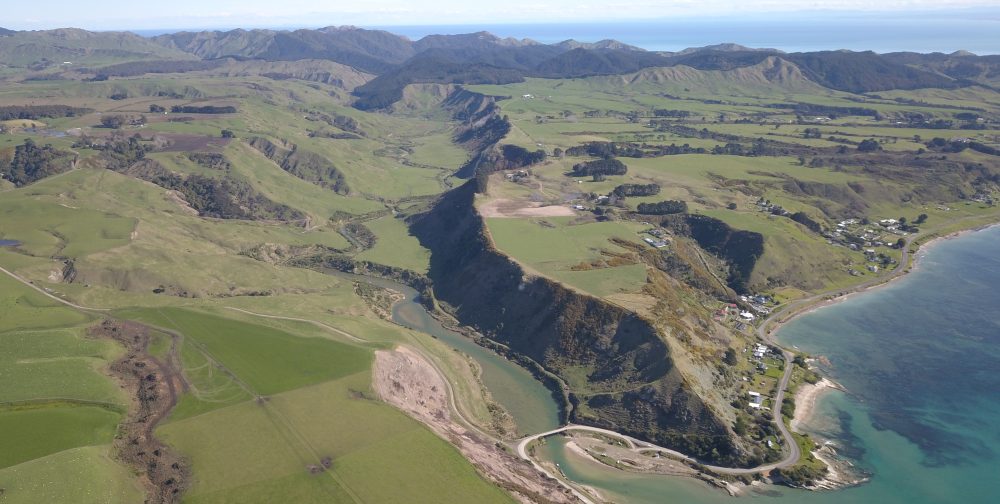
Enjoy this short flight across part of the project.
Enjoy the reading
On Monday 27th August senior students from Te Mahia school came down to Whangawehi to help plant another 100 trees and undertake some much needed weeding. The sun was shining on this beautiful day and the students weren’t lacking energy too. The small forest which was started 4 years ago already had some trees growing over 3 m tall. The students interplanted trees to help thicken this forested area. They checked their blue penguin boxes and were sad to see them uninhabited. Helen Jonas mentioned that 5 of the boxes established on Waikawa has residents with one Penguin siting on 2 eggs…very encouraging news.
Well done to Te Mahia School and a big thank you to the school parents and helpers for supporting the day.


The WCMG is organising a working bee this Saturday 1st September 2018- at the Whangawehi bridge. Roll up your sleeves and come along to help enhance the entrance way of the catchment. We are planning on replacing the old railings and removing the old agapanthus. It should be a good day out..so bring along your family, friends and neighbours. See you there at 9 am at the Whangawehi bridge.


Community efforts to make Mahia predator free take another step forward
The four-year project aimed at removing possums, and controlling mustelids and feral cats from Mahia Peninsula has been named “Whakatipu Mahia – Predator Free Mahia” at a community meeting yesterday.
Iwi, community, central and local government gathered at Tuahuru marae to discuss progress on a landscape scale project aimed at enhancing biodiversity on the peninsula alongside sustainable socio-economic outcomes.
In July, Hawke’s Bay Regional Council and Predator Free 2050 Ltd launched a project aimed at creating a Predator Free Hawke’s Bay. The first phase of the $4.86 million project will focus on removing possums from 14,500 hectares of land on Mahia Peninsula within four years, as an initial step towards ridding the region of predators. It focuses strongly on innnovation and eradication within the farmland predator control context said Rongomaiwahine Chairperson Moana Rongo.
“It is a pleasure to share our community vision of a restored Mahia. The vision is embodied in the name ‘Whakatipu’ meaning growth or re-birth,” Moana said.
Conservation Minister Eugenie Sage also attended the community meeting during a visit to the East Coast region.
“It takes a village to raise a child and it takes a community to save our wildlife. That’s certainly the case in Mahia where iwi and hapu, community members, central government and local councils have all come together to work make this special place a haven for our native plants and wildlife,” said Conservation Minister Eugenie Sage.
“I am impressed by the energy and passion that so many people here have for the project and I will watch its development with great interest,” Minister Sage said.
Following the community meeting the Minister was escorted on a trip to Onenui Station to showcase the leadership role landowners play in landscape-scale conservation through Ngā Whenua Rāhui kawenata agreements (conservation covenant for Māori landowners). Onenui Station is a significant land block within the Mahia landscape, the third largest tract of remaining forest on the Mahia Peninsula and the largest on the peninsula’s south-eastern coast.
Charles Barrie, Department of Conservation
The July water monitoring data is available, note that despite the high number of geese in the catchment , E Coli levels are not too bad!
Pat O’Brien and Nic Caviale were asked to do a presentation to a community group in Mariwai. 15 farmers attended the presentation and were interested to know how we developed our vision into a large scale restoration programme.
https://indelible.wistia.com/medias/nidsty3u2k
In early July, an amazing celebration was held in Napier to celebrate the new PF2050 project that will help remove predators from Mahia Peninsula.
Well done to Campbell Leckie and his team.
Press release :
Bold Predator Free project launched in Hawke’s Bay
A project aimed at creating a Predator Free Hawke’s Bay has been launched in Napier tonight (5pm Monday 2 July 2018) with the announcement of a $1.6 million kick-start in funding from the Government.Hawke’s Bay is the latest region to get behind the country’s goal to become Predator-Free by 2050.The first phase of the $4.86 million project will focus on removing possums from 14,500 hectares of land on Mahia Peninsula within four years, as an initial step towards ridding the region of predators.The knowledge gained in Mahia will be used to develop a low-cost farmland control and eradication model applicable to other areas of the region and New Zealand.Hawke’s Bay Regional Council is investing $1.17 million in the project and Chairman Rex Graham says eradicating possums from Hawke’s Bay is both ambitious and realistic.“We believe we can reduce the cost of rural predator control by more than 50 percent through smart technology and project design, and with landowners’ help I’m confident we can remove them from our landscapes,” says Mr Graham.Hawke’s Bay Regional Council Chief Executive James Palmer says the project fits with the Council’s overarching goal of improving the region’s natural ecosystems and biodiversity and is reflected in the council’s Long-Term Plan and proposed Regional Pest Management Plan.“The Regional Council is committed to building strong partnerships and this project is all about working alongside iwi, local and national organisations and the Government to achieve common goals,” says Mr Palmer.The project builds on the success of the Cape to City and Poutiri Ao ō Tāne projects, which have so far delivered more than 34 thousand hectares of innovative farmland control of possums, mustelids and wild cats, including wireless trap monitoring. An important element of these projects is the strong relationships that have been built with local iwi, as well as hundreds of landowners, schoolchildren and teachers.Predator Free 2050 Limited Chief Executive Ed Chignell says predator control at Cape Sanctuary and the Maungaharuru range show how native seabirds, threatened land birds and unique wildlife like tuatara can return to the region once predators are removed.“This project gets us started on the East Coast and enables new innovation and approaches that will be essential for our national predator free goal,” says Mr Chignell. Predator Free 2050 Limited was created in 2016 to enable co-funding arrangements with councils, philanthropists, businesses and other agencies for large landscape predator control and eradication projects and for breakthrough science.The Predator Free Hawke’s Bay project is also receiving funding from Aotearoa Foundation, Manaaki Whenua/ Landcare Research, Department of Conservation, OMV NZ Ltd, Maungaharuru Tangitū, Zero Invasive Predators and farmers.Last month Predator Free 2050 Limited announced funding for a predator-free project in Taranaki and the company expects to make further funding announcements in other parts of New Zealand over coming months.
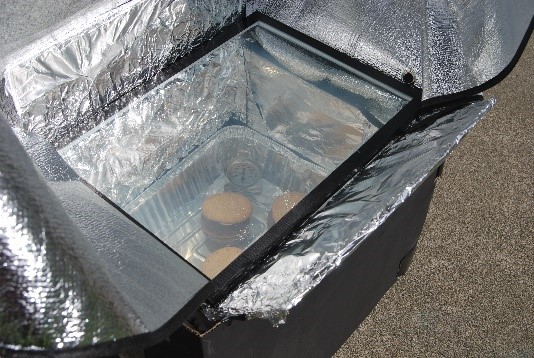
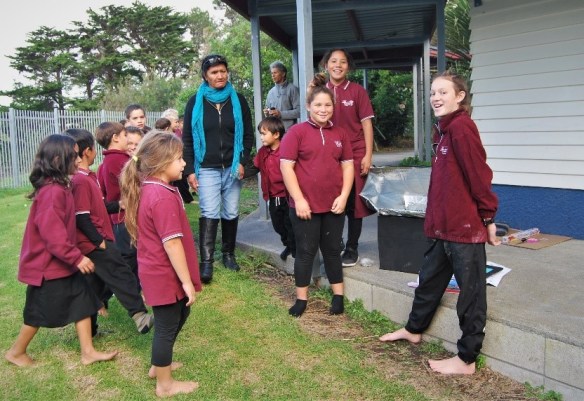
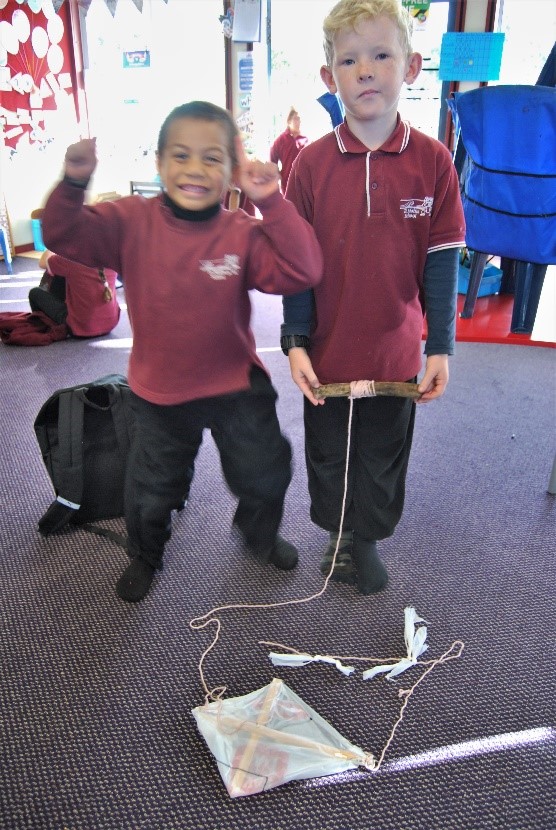
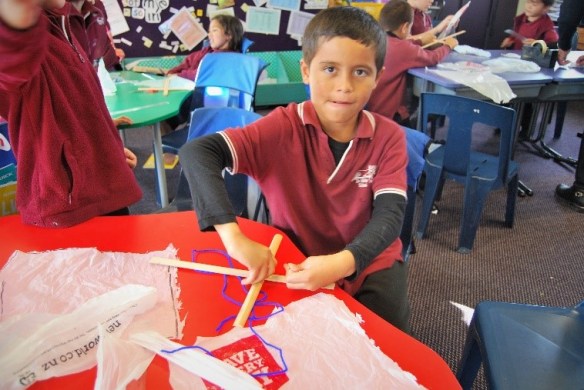
The last day of May was the day for our workshop previously planned for earlier in the term and related to astronomy. However to fit with the current programme we shifted the focus to Science and technology. Juniors made kites and we related this to traditional use of kites. Seniors were interested in inventions – A group of students realised that a sustainable way to cook without power is with a homemade solar oven. They created one and warmed some food despite the cloudy winter weather. Sunny Whangawehi is a great place to use solar ovens for kai.
Our water monitoring data for Mamangu is now available :April2018
 Whangawehi Catchment Management Group